MAKER PROFILE / SANDBERG WALLPAPER
A World Drawn by Hand
Inside Sandberg Wallpaper's Swedish design studio: hand-drawn patterns, archival inspiration, imaginative designers and the decisions behind every printed surface.
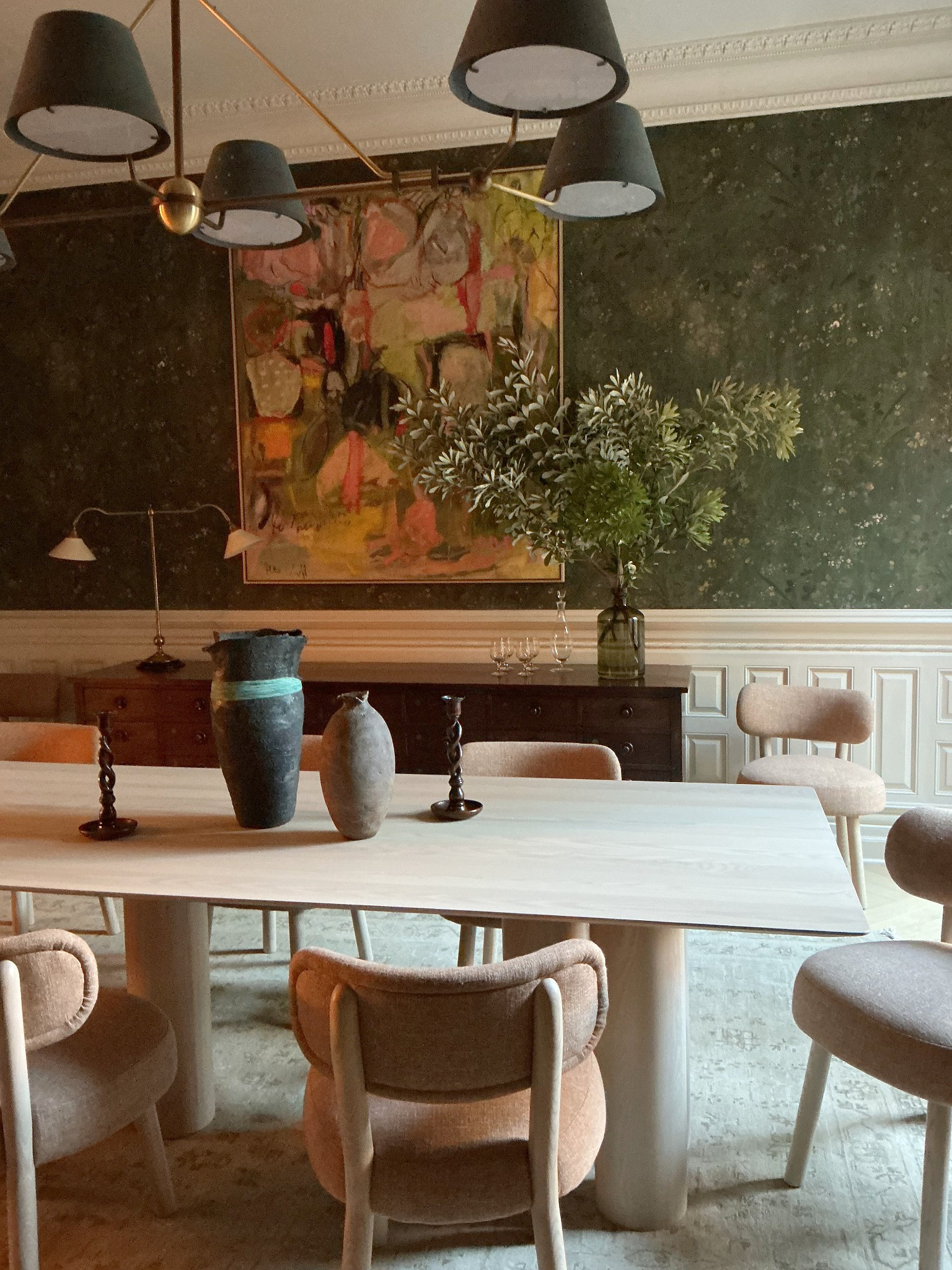
Stoop Studio
At Sandberg Wallpaper, a pattern begins long before it becomes a repeat on a roll. It may start with a memory of a landscape, a drawing found in an archive, a branch in the garden, or a story about someone the designer knows. Then come sketches, revisions, color decisions and the difficult business of turning an image into something that can live across four walls.
The Swedish company calls its work wallpaper art. It is an ambitious description, but an illuminating one. Sandberg's patterns are developed from hand-drawn or hand-painted artwork, and the studio's stated aim is to preserve something of that human gesture in the finished surface. A line should not become lifeless simply because it has to repeat.
From its home in Borås, Sweden, Sandberg has developed a visual language rooted in nature, historical reference and carefully controlled color. The result can be botanical, graphic, scenic or playful, but the design process is remarkably consistent: begin with a story, draw it by hand and revise until the pattern has a life of its own.
A Swedish pattern house with a history
Sandberg was established by the Sandberg family and grew from a tradition of Swedish wallpaper design. In 2026, the brand marks fifty years of what it calls Swedish Wallpaper Art, while its present-day creative home is within the Gimmersta Group. Sandberg is now part of Gimmersta Group, and its designs are seen in interiors far beyond Sweden. Yet its identity remains closely connected to the country's natural landscape, textile heritage and tradition of decorative art.
In the company's fiftieth-anniversary account, the creative team describes a practice that moves between historic designs and the contemporary moment. Some patterns are revisited almost as they originally appeared; others are dismantled and reconsidered through new scales, colorways or arrangements. The archive is not treated as a museum cabinet. It is an active part of the design studio.
That distinction matters. Historic references can easily become nostalgic shorthand. Sandberg is interested in the feeling of a pattern, not just its date. A botanical motif that might once have belonged to a manor house can find a second life in a vivid contemporary palette. An old decorative rhythm can be reinterpreted without losing the quality that made it compelling in the first place.
From a pencil line to a room
Hand-drawing is central to the studio's process. Designers begin with sketches and paintings rather than selecting motifs from a ready-made digital library. Shapes are explored, moved, redrawn and combined. Scale is tested: a little leaf that looks charming on paper may disappear across a large wall, while a generous branch can become overwhelming once it repeats around a room.
Color is considered just as carefully. A wallpaper's palette affects the atmosphere from the moment someone crosses the threshold. A cool blue can make a dense pattern feel airy; a deep green can turn the same basic design language into something enveloping. Sandberg speaks of developing numerous sketches before arriving at the balance between pattern and its distinctive palette.
This is a different way of thinking about decoration from choosing a print to fill an empty surface. The drawing, the scale and the color must work in a room where the pattern will be interrupted by windows, furniture, doors, art and changing daylight. The wallpaper is not a framed image; it is an environment.
The choice of printing technique is part of that translation. A painterly mark has to retain enough nuance at finished scale, while a closely detailed repeat needs to remain legible on the wall. Sandberg explicitly includes brushwork, color development and printing choices in its description of how each design is realized, rather than presenting the artwork and manufactured paper as separate concerns.
Meet the designers
The names behind a pattern are part of what makes the company interesting. On Sandberg's designer page, Sara Bergqvist describes beginning with a story, a place or a person, then using pen, brush and paper to build a world around that idea. Her motifs can carry botanical references alongside invented details, inviting someone to look a little longer.
Karolina Kroon approaches pattern through storytelling too, describing a fascination with historical ornaments, Scandinavian nature, travel and unexpected combinations. Her work moves easily between landscape, narrative and decorative repeat. The two designers illustrate the breadth of the studio's approach: individual voices working within a shared belief in the value of drawing and considered color.
These are not abstract claims about creativity. They explain why Sandberg designs tend to reveal more on a second look. An arrangement of leaves has a particular direction. A distant shoreline may contain an architectural detail. A seemingly simple repeat is shaped by decisions about how a viewer's eye moves across it.
How an archive becomes contemporary
Archival work is one of the more compelling parts of Sandberg's practice. The company describes revisiting hundreds of historic sketches held in its pattern library, sometimes restoring an older design faithfully and sometimes reworking it substantially. That creates an ongoing conversation between historical decorative language and contemporary interiors.
It is easy to imagine an archive as a room full of final answers. In practice, old patterns offer questions: What made this particular arrangement of flowers appealing? Does its rhythm still feel good at modern wall heights? Should the color be softened or intensified? What would happen if the motif became larger, or if the negative space around it changed?
Sandberg's strength lies in treating those questions as part of design rather than simple reproduction. Past and present are not competing styles. They are materials from which a new visual language can be developed.
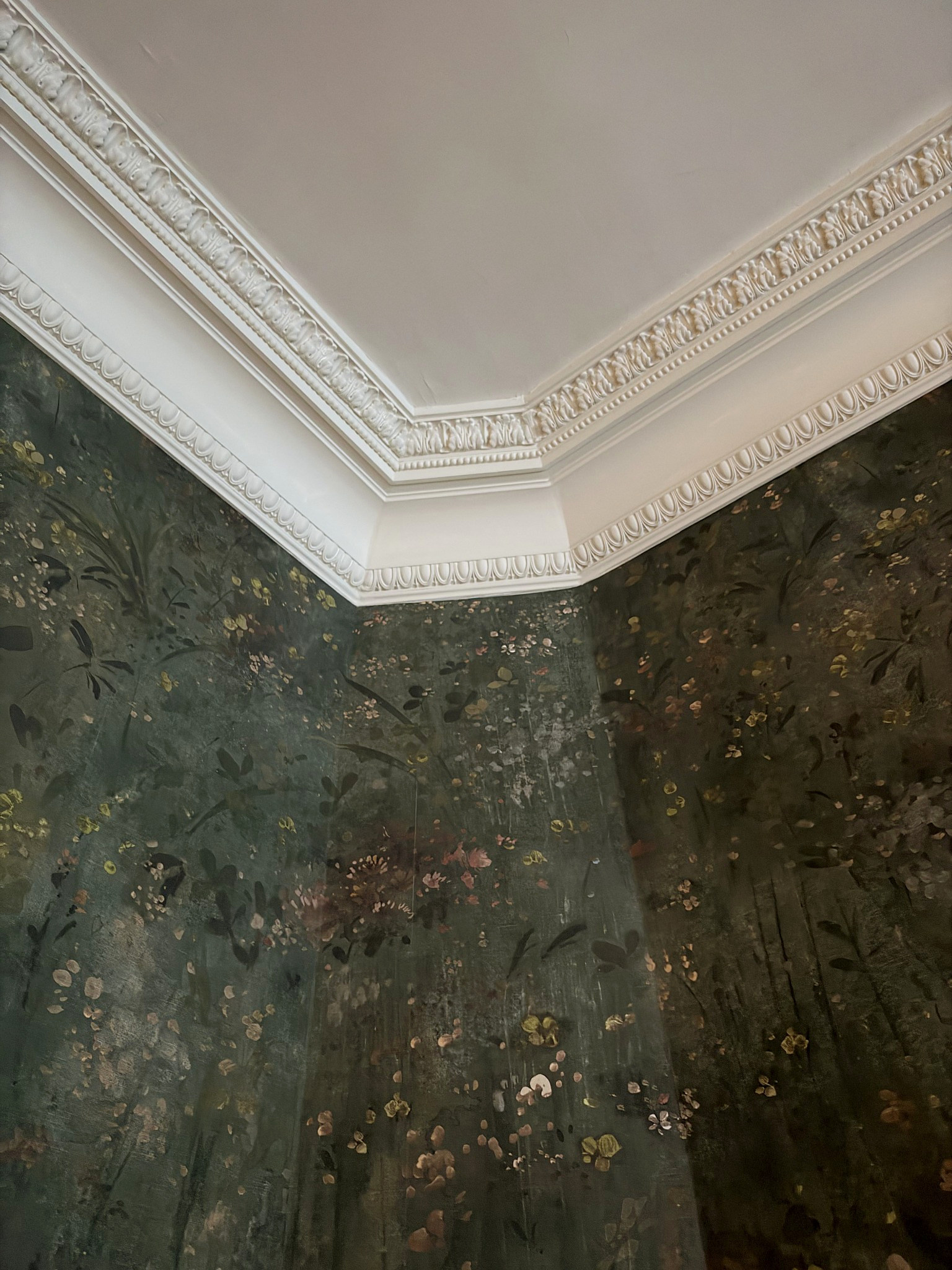
The discipline of a distinctive palette
Color is often the first thing someone notices about a wallpaper and the hardest thing to describe accurately. Sandberg's approach favors palettes that feel deliberate rather than simply fashionable. Even its more expressive designs retain a relationship between background, motif and the visual weight of the repeat.
For designers, that control is particularly useful. A wallpaper can establish an entire palette for a room, but it must also leave space for furniture, art and architectural materials. The best patterns offer a point of view without insisting that everything around them match.
Sandberg's position as a purveyor to the Royal Court of Sweden is one recognition of the brand's design heritage. More interesting to us is how comfortably the work can inhabit very different settings—from a formal dining room to a modern apartment to a private sitting room. The paper has character, but it is not limited to a single architectural period.
Where Sandberg has found a place in our work
Sandberg has appeared in several of our rooms, including the deep botanical Juni in a dining room, Lake Como in an intimate primary-floor solarium and Bonnie & Kites in a relaxed family room. They are three entirely different expressions of the same maker's range: painterly, scenic and playful.
What drew us to each was the clarity of the idea behind it. We love wallpaper that gives a room a strong personality without requiring every other element to follow a rigid formula. Knowing the thought that goes into the drawing makes these patterns even more interesting to live with.
Why the hand still matters
Wallpaper is a manufactured material, designed to cover a surface consistently. Yet the most memorable examples often begin with something insistently individual: a brushstroke, a slightly imperfect line, a designer's memory of a place. Sandberg's process is a reminder that reproducibility does not have to erase an artist's hand.
What we admire is the full arc—from inspiration and archive to drawing, color and final printed surface. The result is more than a decorative backdrop. It is a piece of design whose making is worth understanding.
MAKER / Sandberg Wallpaper, Borås, Sweden. Sources: Sandberg's company background, 50 years of Swedish wallpaper art and designer profiles. Image: Stoop Studio. This is an independent editorial profile, not an interview or paid collaboration.