MAKER PROFILE / ARKADA MOLDINGS
The Art of Making Old Plaster New Again
Inside Arkada Moldings, the Brooklyn workshop specializing in historic plaster restoration, custom architectural ornament and the craft of making old details anew.
Stoop Studio
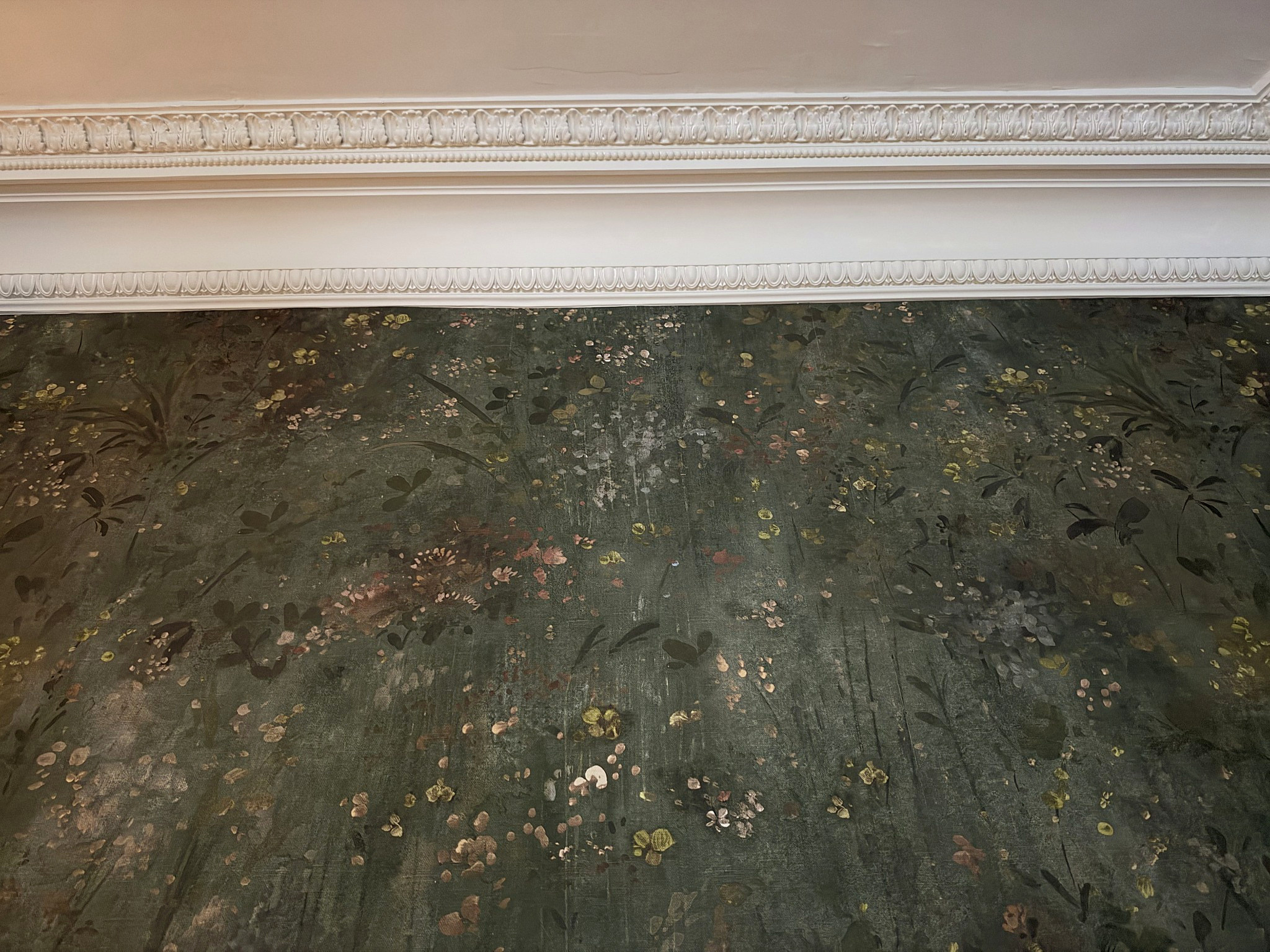
Look at a plaster cornice in the morning, then return when the sun has moved. Its profile will have changed without moving at all. One edge catches the light, another slips into shadow. What appeared from the doorway to be a simple white band reveals a sequence of curves, ridges and minute decisions. This is what exceptional ornamental plaster does: it gives architecture a rhythm that can be felt before it is fully understood.
In Brooklyn, Arkada Moldings has built its practice around precisely these details. The family-owned workshop has spent more than three decades producing and restoring decorative plaster for homes, institutions and commercial interiors. Its work ranges from careful replicas of historic moldings to original designs for new spaces. What unites those assignments is an understanding that ornament is inseparable from proportion.
A craft that begins with looking
Restoring an old ceiling is not the same as choosing a new molding. A surviving stretch of plaster may be the only evidence of what once ran around the room. Elsewhere, renovations can have obscured the profile entirely. The work begins with questions: What can be saved? What should be replicated? How should a missing section meet the original? And if the new architecture is different, how closely should the design follow the past?
The vocabulary is extensive. Cornices mediate between wall and ceiling. Ceiling medallions create a focal point around a pendant or chandelier. Pilasters, panels, capitals and decorative reliefs lend structure to expanses that might otherwise feel anonymous. Each has its own relationship to the room's height, width, windows and doorways. A profile that looks exquisite on a sample board can overwhelm a low ceiling; one that is too restrained can disappear in a generous room.
Arkada's published catalogue includes more than 1,500 plaster designs, including moldings, columns and medallions. That depth of reference matters. Rather than approaching every project with the same few profiles, the workshop can consider how different eras and architectural conditions might call for different solutions. Its services extend beyond a catalogue purchase to historical restoration, custom design and installation. Explore the workshop's catalogue and restoration work.
From drawing to dimension
According to Arkada's description of its own process, a project begins with a consultation to establish the scope and design direction. Sketches and models follow; only after those decisions are resolved does the work move into fabrication and installation. It is an important sequence. The finished plaster is three-dimensional, but the best result depends on understanding its shape before anyone begins fitting it to a wall.
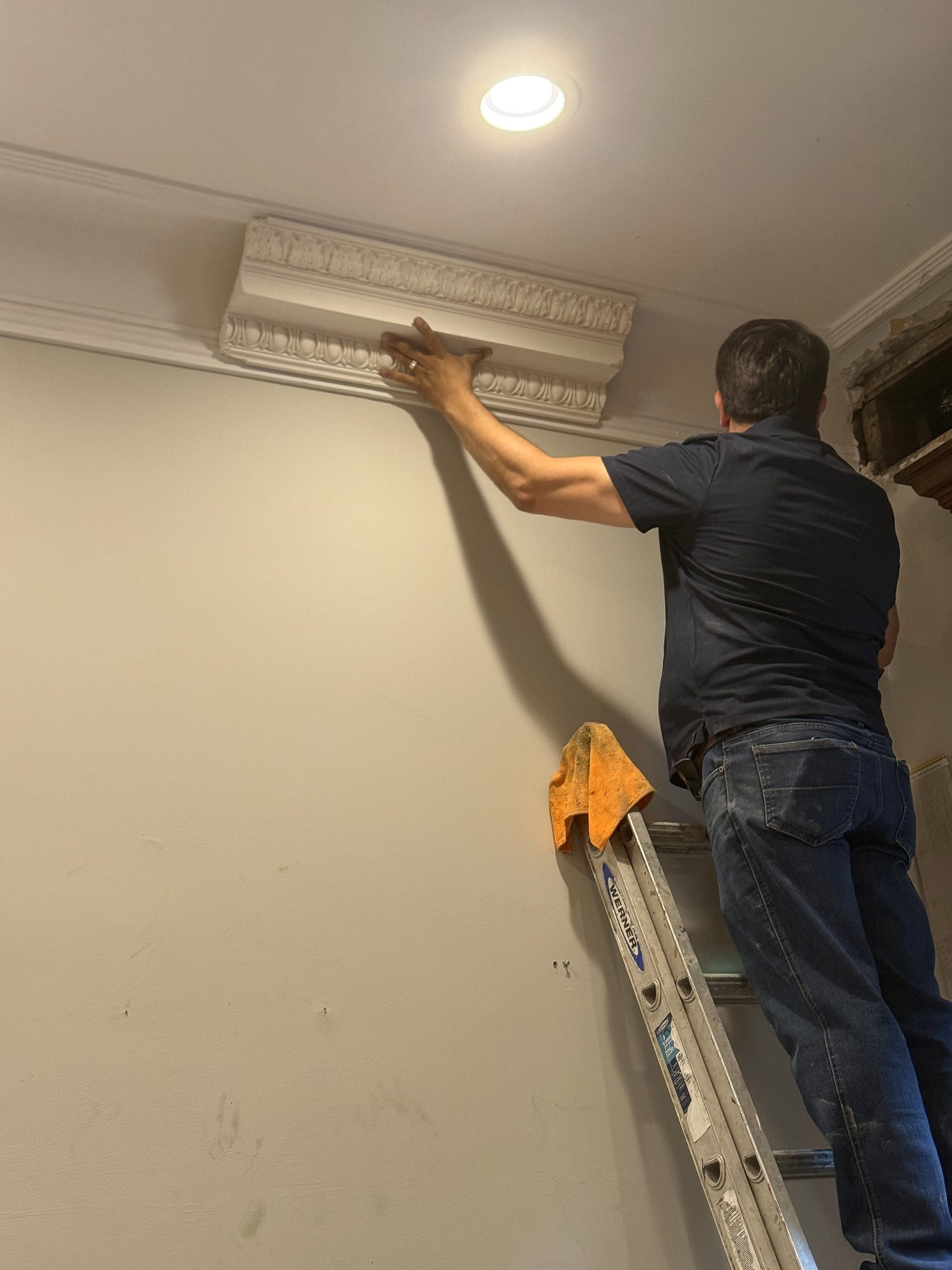
Consider a cornice turning the corner of a room. The profile has to read continuously, including where adjacent lengths meet. The scale must remain persuasive as it passes windows, returns and architectural openings. A ceiling ornament has to feel appropriate to both the size of the space and the fixture it frames. These are partly technical problems, but they are also exercises in judgment.
A strong plaster design depends on restraint just as much as decoration. Its curves should catch daylight in the right way. Relief should be legible without becoming heavy. A room with elaborate paneling may need a different cornice from one whose walls are largely uninterrupted. What appears to be a small adjustment in a molding profile can change the atmosphere of an entire space.
Restoration without imitation
One of the interesting things about contemporary plaster workshops is that they serve both preservation and new design. A historic restoration may require the closest possible match to an existing detail. A contemporary project may instead borrow the logic of classical moldings while drawing entirely new shapes. There is no contradiction between those roles. Both ask for an understanding of scale, material and the relationship between ornament and architecture.
The strongest restorations resist the urge to add decoration simply because an old building can accommodate it. Too much detail can obscure a house's actual character. Too little can strip away the visual language that gave it identity. A workshop with experience in both replica and custom work is useful precisely because the answer is rarely one-size-fits-all.
Arkada also handles installation, allowing the details developed for a project to be fitted as part of the work rather than handed off without context. That connection between design, making and the finished room is a meaningful part of the craft. The decision is not complete when the profile leaves the workshop; it has to belong to the architecture once installed.
A Brooklyn workshop with a much wider reach
Arkada's production workshop and showroom are based in Brooklyn, but the company takes on assignments well beyond New York, including projects across the United States. Its clientele includes architects, contractors, interior designers and homeowners. The mix of renovation and new-build work suggests how broadly this old material is still used: in homes, hotels, restaurants and other spaces where a particular architectural expression matters.
That reach is an encouraging counterpoint to the idea that ornamental plaster is a vanishing trade. The appetite for well-made decorative architecture still exists. A carefully chosen cornice may be a quiet detail, but the craft needed to produce one has real contemporary relevance.
Where we encountered their work
We worked with Arkada on the restoration of a nineteenth-century New York townhouse. The house retained some of its original architectural details but needed additional plasterwork to restore coherence across the rooms. In the parlor, a substantial crown and period-appropriate ceiling ornament helped reestablish the room's character; upstairs, slightly more restrained profiles connected the private spaces to the rest of the house.
What interested us most was not ornament for its own sake, but the way carefully judged plasterwork gives contemporary furnishings, saturated color and expressive lighting an architectural frame. It allows old and new elements to coexist without either feeling like a costume.
Why this kind of work matters
There are parts of a home we learn to name: a particular marble, a designer chair, a favorite light. Then there are the details that quietly hold those things together. Plaster often belongs to the second category. It shapes the space around the furniture rather than asking to be noticed as an object.
Arkada's work is a reminder that craftsmanship is not limited to objects you can move or collect. Sometimes it is built into the room itself. A well-proportioned cornice or restored medallion gives a building continuity and confidence—qualities difficult to quantify, and harder still to replace once they are lost.
MAKER / Arkada Moldings, Brooklyn. Company background, capabilities and published process are sourced from the maker's official website. Project photographs: Stoop Studio. This profile is an editorial appreciation, not an interview or sponsored feature.